7 countries with the highest maternal mortality rates — where does South Africa rank?
By bukky·
Maternal mortality is a genuinely serious concern for underdeveloped nations.
According to new data published in the report, Trends in maternal mortality 2000 to 2023, a woman died almost every two minutes from complications during childbirth in 2023.
Beyond that, over 700 women died from preventable causes related to pregnancy and childbirth every single day in the same year, leading to 260,000 deaths in total.
It becomes scarier when we realise that most of these deaths could have been prevented.
What is the leading cause of maternal mortality?
With the lifetime risk of 1 in 66 women likely to die from a maternal cause in low-income countries, it has become necessary to know the leading cause of maternal mortality.
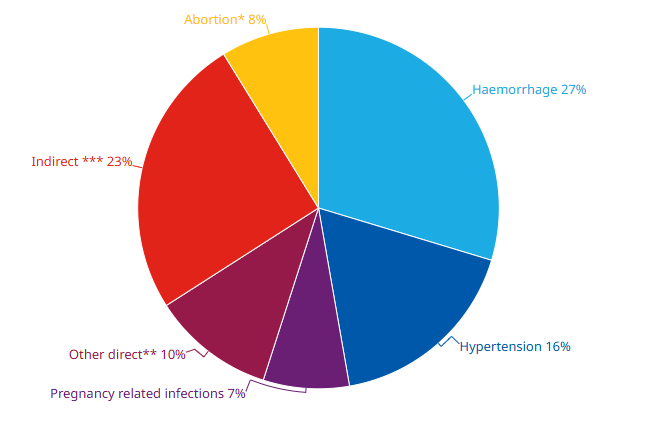
Severe bleeding (haemorrhage) after childbirth is the major complication that causes around 75% of all maternal deaths.
Other major complications that account for this grossly disturbing statistic include:
Infections (usually after childbirth)
High blood pressure during pregnancy (pre-eclampsia and eclampsia)
Complications from delivery; and
Unsafe abortion.
Most of these complications are not only preventable but also treatable. Some of them, in fact, develop during pregnancy.Image unavailable — [UNICEF] Original sourceThere are other social and cultural factors that can affect maternal health outcomes. They include:
Education, ethnicity, race, gender and income
Harmful gender stereotypes, biases and inequalities that restrict girls and women's rights
Poor health systems involving a lack of adequate trained and competent health workers and essential medical supplies; and
External factors like conflict and humanitarian hardships which cause instability.
What's the difference between maternal mortality ratio (MMR) and maternal deaths?
The World Health Organisation (WHO) defines the maternal mortality ratio (MMR) as the number of maternal deaths per 100,000 live births during a given time period.
The 11th revision of the International Classification of Diseases (ICD) defines maternal death as "the death of a woman while pregnant or within 42 days of termination of pregnancy, irrespective of the duration and site of the pregnancy, from any cause related to or aggravated by the pregnancy or its management but not from unintentional or incidental causes."
The difference is that maternal deaths show how many women are dying while MMR shows how dangerous it is to be pregnant in that country.
A country can have a higher MMR with fewer maternal deaths because fewer women give birth there but the risk per birth is high.
Countries with the highest maternal mortality ratio (MMR)
Now let's look at the five countries with the highest maternal mortality ratio (MMR) in the world, according to the Trends in maternal mortality 2000 to 2023 report released in 2025.
Among these five, note that only one country tops both lists of the highest number of maternal deaths and the highest MMR.
This means that the country has:
A huge number of women giving birth; and also
A very high chance of dying from it.
The country is, therefore, struggling with the quality and reach of maternal care across board. It needs urgent, large-scale maternal health interventions.
Find out which country it is below.
South Sudan – 1,223
Chad – 1,063
Nigeria – 1,047
Central African Republic – 835
Guinea-Bissau – 725
Liberia – 652
Somalia – 621
As of 2023, South Africa does not rank among the top seven countries with the highest maternal mortality rates.The countries with the highest maternal mortality rates per 100,000 live births are:
South Africa's maternal mortality rate was 108 deaths per 100,000 live births in 2020, placing it outside the top 20 globally.
However, there are regional disparities within South Africa.For instance, in the 2022/23 period, the Western Cape province recorded 62 maternal deaths per 100,000 live births, while the Eastern Cape had a higher rate of 124.3.
While South Africa has made strides in reducing maternal mortality, achieving the United Nations Sustainable Development Goal of fewer than 70 maternal deaths per 100,000 live births by 2030 remains uncertain.
In contrast, countries like South Sudan, Chad, and Nigeria face significant challenges in maternal health, with rates exceeding 1,000 deaths per 100,000 live births.
Efforts to improve maternal health outcomes in South Africa are ongoing, with a focus on addressing regional disparities and enhancing healthcare access and quality.