





Celebrities
Sol Phenduka and Anele Mdoda call out transactional culture in the entertainment industry


South African media personalities Sol Phenduka and Anele Mdoda have sparked a thought-provoking conversation about the state of support within the entertainment industry, with both stars calling out what they describe as a growing culture of transactional relationships.
Taking to social media, Sol Phenduka shared his concerns about what he sees as a “quid pro quo” culture dominating the space.
In his post, he lamented that genuine support has become rare, suggesting that acts of kindness or public endorsement often come with expectations attached.
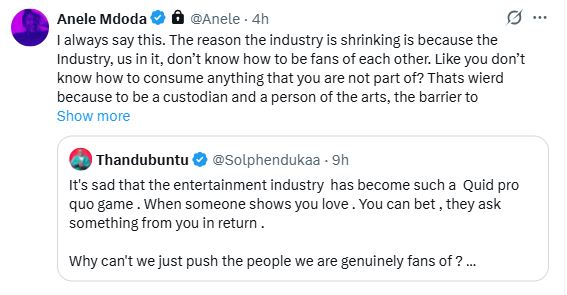
“It’s sad that the entertainment industry has become such a quid pro quo game,” he wrote.
“When someone shows you love, you can bet they ask something from you in return. Why can’t we just push the people we are genuinely fans of? It’s not always about benefitting from the person you show support,” Phenduka added.
His comments quickly resonated with many, including Anele Mdoda, who echoed his sentiments while offering a broader perspective on the issue.
According to Mdoda, the lack of genuine support among industry players is contributing to stagnation and limiting growth within the sector.
“I always say this,” she responded. “The reason the industry is shrinking is because the industry, us in it, don’t know how to be fans of each other. Like you don’t know how to consume anything that you are not part of? That’s weird because to be a custodian and a person of the arts, the barrier to entry is to be a massive fan of the arts.”
Mdoda’s remarks highlight what she believes is a fundamental disconnect; creatives who are unwilling to support or engage with work that does not directly involve them.
She argues that being part of the arts should naturally come with an appreciation and celebration of others’ work, something she feels is increasingly lacking.
The exchange between the two personalities has since ignited wider discussions online, with many agreeing that the entertainment industry could benefit from a shift toward more authentic support systems.