



Editorial
Is AI coming for music producers? What South Africa’s sound says about the future

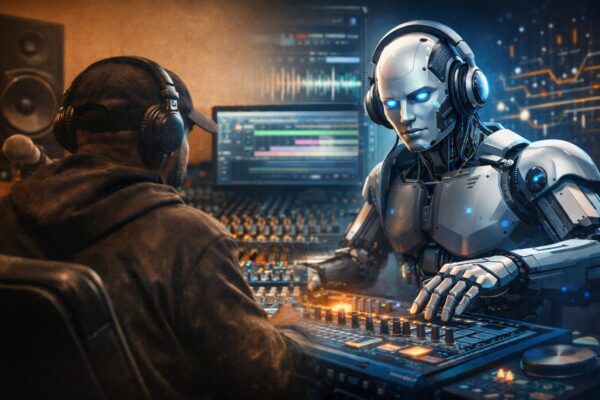
An editorial on artificial intelligence, culture, and the future of South African music
Artificial intelligence has officially entered the South African music conversation, not as a theory but as a practical tool already shaping releases, workflows and debates.
From AI-generated vocals to beat-making software that can assemble full tracks in minutes, the question is no longer whether AI belongs in music, but whether AI can really replace music producers?
Recent discussions around AI-assisted songs have pulled producers into the spotlight, forcing the industry to confront a difficult reality: technology is moving faster than tradition. But in a music ecosystem as culturally layered as South Africa’s, replacement is not a simple equation.
Why AI feels like an opportunity for emerging artists
For many upcoming artists and bedroom producers, AI represents access. Studio time is expensive, equipment is costly, and industry gatekeeping is still very real.
AI tools lower the barrier to entry by offering instant production, reference-ready mixes and genre-specific templates that allow creatives to release music without waiting for resources or approval.
In a country where many artists operate independently, this matters.
AI can help a young artist in Polokwane or Mdantsane sketch ideas, test sounds and distribute music at a pace previously reserved for well-funded acts. Used responsibly, it can be a launchpad; a way to participate in the industry rather than watch it from the sidelines.
Music producers as cultural translators, not just beat-makers
But South African music has never been built on convenience alone; producers here don’t simply assemble sounds; they translate culture.
No algorithm can feel the heartbeat of a township crowd, anticipate the subtle cheer of a dance floor, or know when a pause in a beat will make listeners lean in.
It’s this human intuition, the emotional intelligence and lived experience that gives South African music its soul.
From Oskido’s role in shaping and exporting Kwaito, to DJ Maphorisa’s fusion of township rhythms with global club sounds, production has always been about context.
Kabza De Small didn’t just popularise Amapiano by following a formula, he refined its emotional depth, slowed it down, made space for silence and groove, and trusted instinct over algorithm.
Prince Kaybee’s work, similarly, leans heavily on feeling and storytelling, crafting songs that resonate emotionally rather than just sonically.
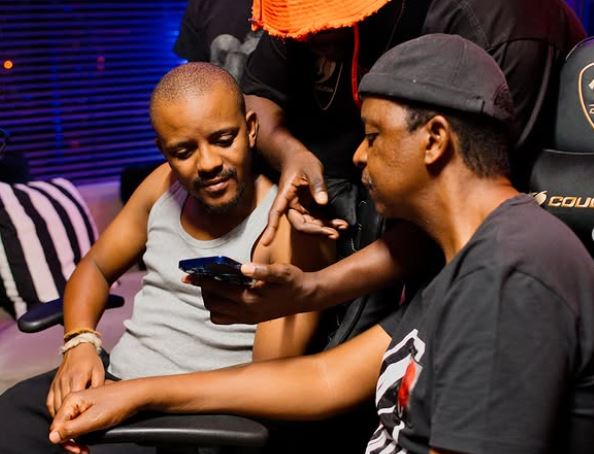
Kabza De Small and Oskido in the studio
These decisions are not data-driven, they come from lived experience, crowd reaction, late-night studio experiments and an intuitive understanding of how South Africans move, celebrate and mourn through music. AI can replicate patterns, but it cannot yet interpret meaning.
What AI does well, and where it falls short
AI excels at speed, consistency and imitation; it can analyse hit songs, replicate structures and generate music that sounds familiar enough to succeed on streaming platforms.
For content-driven environments, that efficiency is attractive.
However, imitation is not innovation. South African genres have historically thrived on bending rules, Gqom’s raw minimalism, Amapiano’s unconventional arrangements, Afro-house’s spiritual undertones. These movements were not predictable, and that unpredictability is exactly what made them global.
AI responds to what already exists. Producers imagine what doesn’t.
The risk of convenience over creativity
The real concern is not that AI will replace producers, but that the industry may start rewarding shortcuts over craftsmanship.
If speed and volume become more valuable than originality, the soundscape risks becoming polished but emotionally thin.
Producers like Maphorisa, Kabza De Small and Oskido didn’t just make hits, they built ecosystems, introduced new artists and shaped eras.
That kind of impact requires human judgment, mentorship and risk-taking, elements no algorithm currently offers.
Can AI replace music producers?
In the South African context, the answer is NO! not if music remains a cultural expression rather than disposable content.
AI will undoubtedly become part of the production process, assisting with ideas, efficiency and experimentation, but the producer’s role as curator, cultural interpreter and emotional architect remains deeply human.
The future of South African music is not about choosing between AI and producers. It is about how producers use AI without surrendering the soul of the sound.
As long as music continues to reflect lived realities, local rhythms and collective memory, the producer will remain irreplaceable, not because technology failed, but because culture cannot be automated.